🤔 Vertical or Lateral Thinking: Which is Right for Your Challenge?
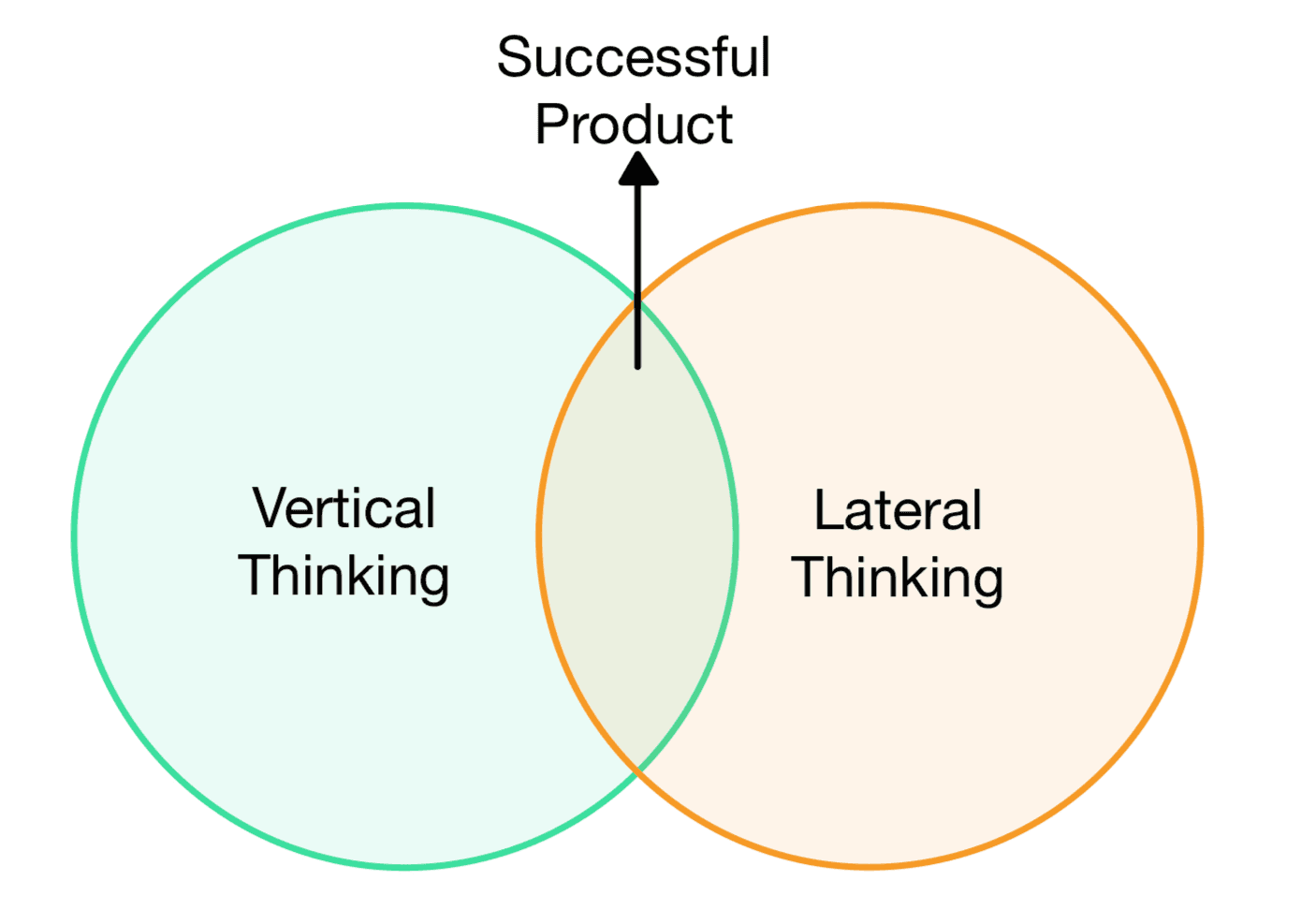
There are two ways to think while approaching a problem: Lateral and Vertical thinking.
𝑾𝒉𝒂𝒕 𝒊𝒔 𝑽𝒆𝒓𝒕𝒊𝒄𝒂𝒍 𝑻𝒉𝒊𝒏𝒌𝒊𝒏𝒈? ⬇
• Approaches problems using tried and tested formulas.
• Takes an idea, solidifies it, backs it with data, and executes it.
• Very helpful in the optimization of a process/product by optimising it piece by piece.
• Upside:
- Easy and straightforward
- Backed by data or existing patterns
- Requires less time and effort
• Downside:
- Offers lower potential impact/reward
- Diminishing returns over time
- Effectiveness drops for a given product/process
• Ex. Optimization of Sign-Up funnel of LinkedIn, Replication of Open in web feature for different apps by OpeninApp.
𝑾𝒉𝒂𝒕 𝒊𝒔 𝑳𝒂𝒕𝒆𝒓𝒂𝒍 𝑻𝒉𝒊𝒏𝒌𝒊𝒏𝒈? ⬅️➡️
• Approaches problems with a fresh perspective, innovative mindset, using out-of-the-box ideas.
• Breaks/challenges existing solutions.
• Helpful when existing patterns/solutions are failing (reasons could be that the solution is not relevant or failing to differentiate because the market is cluttered with similar solutions).
• Upside:
- Enormous potential
- High impact/reward
- High chances of standout, if successful.
• Downside:
- Hard to ideate, build, and execute
- Takes significant time and effort
- Carries a higher risk of failure
• Ex. No Cancellation feature and transparent pricing by BluSmart
𝑺𝒐, 𝒘𝒉𝒊𝒄𝒉 𝒊𝒔 𝒓𝒊𝒈𝒉𝒕 𝒇𝒐𝒓 𝒚𝒐𝒖𝒓 𝒄𝒉𝒂𝒍𝒍𝒆𝒏𝒈𝒆?
• Both approaches are valid in their own right. Their use completely depends upon the context of the problem we want to solve.
• Vertical thinking is often preferred for improving existing products.
• Lateral thinking takes priority when the market is cluttered with similar solutions, and they're failing to serve their goal.
• The right combination of vertical and lateral thinking is absolutely critical for the long-term success of a product. 💡